Originally published by Andrew Webster of The Australian
27.03.2026
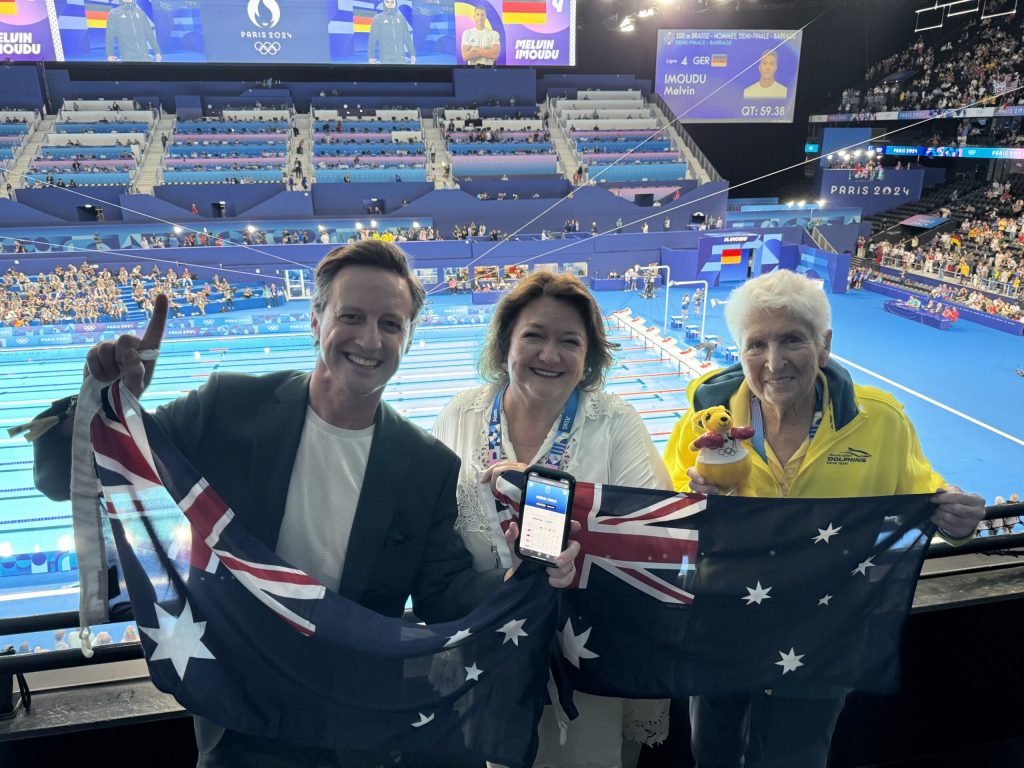
Australia’s richest person, Gina Rinehart, has called on business leaders to stop burning money on “woke-style conferences and virtue-signalling initiatives” and support Olympic athletes and coaches in the lead-up to the 2032 Brisbane Games.
As revealed in this space last week, Olympic and Paralympic sports privately fear high-performance funding will be slashed when the federal budget is handed down in May.
While Rinehart wouldn’t be drawn on that issue, nor the broader topic of sports funding, she told this column she hoped more wealthy benefactors would offer financial assistance, as she has for more than 30 years.
“I’ve long called on business leaders to step up and support our athletes and dedicated coaches,” she said. “It’s a meaningful and practical investment in our country and in the people who represent Australia on the world stage. Too many companies and business leaders continue to waste company millions on luxury overseas conferences they should pay for personally – virtue-signalling initiatives or billions of shareholders’ money into other causes that do nothing for increasing revenue, productivity, or national pride.
“I would love to see more business leaders step up and directly support our athletes and dedicated coaches. Both need more support.
“The Brisbane Olympics is a once-in-a-generation chance to bring Australians together. Our athletes have a unique way of uniting Australians, inspiring the next generation, and giving us a shared sense of pride.”
Rinehart has never divulged how much she’s invested in Australian sport through her company Hancock Prospecting, but some estimate it’s upwards of $100m, perhaps more. She’s aided athletes and coaches in swimming, rowing, artistic swimming and, previously, volleyball. She’s also a partner of the AOC.
Swimming is where most of her support has been directed, providing funding through Swimming Queensland and Swimming WA after cutting ties with Swimming Australia in 2021 following disputes over governance and concerns that athlete payments were being made late.
Has much really changed at SA and other sporting bodies?
In response to last week’s column, several managers of Olympic and Commonwealth Games athletes told me the funding cuts feared by member sports wouldn’t hurt the athlete – because the athlete never sees enough money anyway. They argue too much is sucked up by bureaucrats and overpaid and unnecessary high-performance staff.
So the people who need it the most don’t get it? What a surprise.
After breaking the longstanding men’s 50m freestyle record at the China Open in Shenzhen last week, Brisbane swimmer Cameron McEvoy lamented how swimmers at the drug-fuelled Enhanced Games in Las Vegas in May will receive a $US1m bonus ($1.4m) if they break a world record while he received nothing.
“I’m dumbfounded in terms of the stark contrast that exists in the landscape of world swimming,’’ McEvoy said. “It’s crazy to think that to get a world record without a suit, and without any form of performance enhancing drugs, the bonus is zero dollars.”
If McEvoy wants to trash his reputation, he can juice to the gills and compete with the rest of the guinea pigs who will be on show, but his point is valid: why are world-record breaking athletes not making more money?
One manager argues that Olympic medallists like McEvoy don’t need the support as much as the junior athlete who can’t fill up the car to get to training.
The tech billionaires, venture capitalists and Gay Mafia dons behind the Enhanced Games don’t care about young competitors. Couldn’t care less about grassroots. They want to use competitors in the twilight of their careers – or, in the case of James Magnussen, retired – as vehicles to promote the anti-ageing peptides they’re selling. It’s gross.
As you’d expect, the IOC dismisses the Enhanced Games like its flicking away an ant. After record broadcast and streaming ratings for the most recent Summer and Winter Olympics, especially the US and Australia, it can afford to be haughty about its future. Reports about its death have been exaggerated.
What bewilders athletes is the IOC does this from a towering financial position. As of December 31, it had $US7bn in total assets, including $US5.1bn in cash and financial assets with reserves of $US4.9bn. It says it distributes 90 per cent of its revenue to organisations in the Olympic movement, but how much of that trickles down to the athlete is unclear.
If not for benefactors like Rinehart, some of these athletes would never have made it to the start line. Australia would never have won the medals it has in the pool.
She ensured Australia would be well represented in swimming at the Commonwealth Games in Glasgow later this year by throwing up medal bonuses: $20,000 for gold, $15,000 for silver, and $10,000 for bronze, plus additional bonuses for world records and relay victories.
“Our athletes wear the green and gold and stand on the medal podium with enormous pride,” she said. “It’s not only about physical training, it’s about mindset, resilience, discipline, access to dedicated coaches, facilities and support, and the ability to perform under pressure. It also takes a team, coaches, parents, family, partners and volunteers who all play a vital role. That’s why I have supported hundreds of athletes directly since 1992 and taken on patron roles to help ensure they have the time to focus on their training and competitions.”